Resuscitation & Emergencies
How to choose your defibrillator in Morocco: complete buying guide
By Abdelrhafar Naouri8 min readUpdated · June 2026
Discover our complete buying guide to equip your clinic, business, or public space in Morocco. Compare defibrillator types, indicative price ranges, and regulations.
Back to resources1. Introduction: The vital importance of defibrillators in Morocco
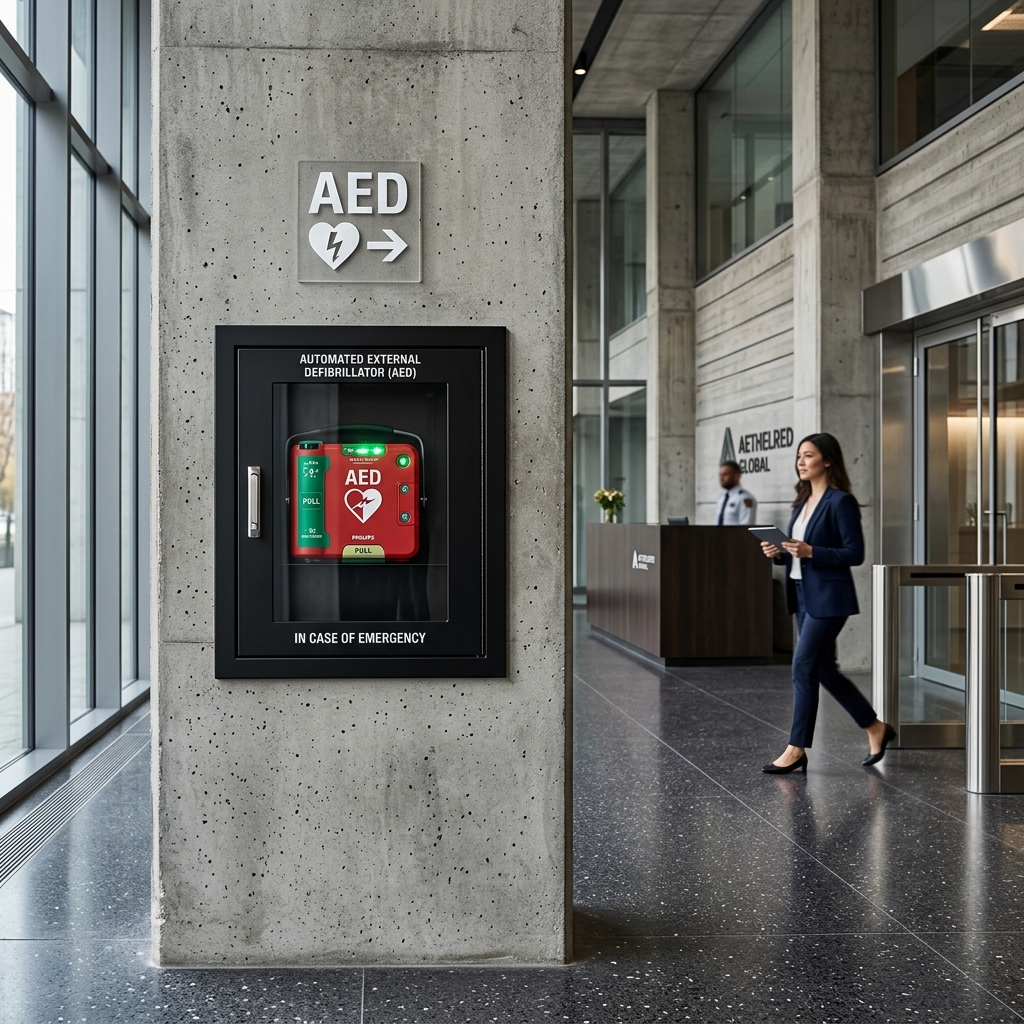
Equipping public access facilities, businesses, and clinics in Morocco with an automated external defibrillator (AED) has become an essential safety standard. In the face of sudden cardiac arrest, every minute counts: survival rates drop by 10% for every minute without defibrillation. Having a functional and accessible device allows for an intervention within seconds before medical emergency services arrive. In Morocco, whether in Casablanca, Tangier, Rabat, or Marrakech, an increasing number of professional facilities are equipping themselves to protect employees and patients.
2. Fully vs Semi-Automatic: What differences and which model to choose?
There are two main types of automated external defibrillators on the market: the Fully Automatic Defibrillator (AED) and the Semi-Automatic Defibrillator (SAD). The Fully Automatic model analyzes the victim's cardiac activity and delivers the electric shock itself without any human intervention if the heart rhythm requires it. It is ideal for public places and offices where staff are untrained. The Semi-Automatic model requires the user to press a button to trigger the shock after the device's analysis. This model is generally preferred by healthcare professionals (clinics, doctors, nurses) because it allows control over the exact moment the shock is delivered.
- Fully Automatic: Recommended for offices, malls, and hotels in Morocco.
- Semi-Automatic: Preferred for private clinics, dental practices, and emergency rooms.
3. Clinical and technical criteria: essential rescuer benchmarks
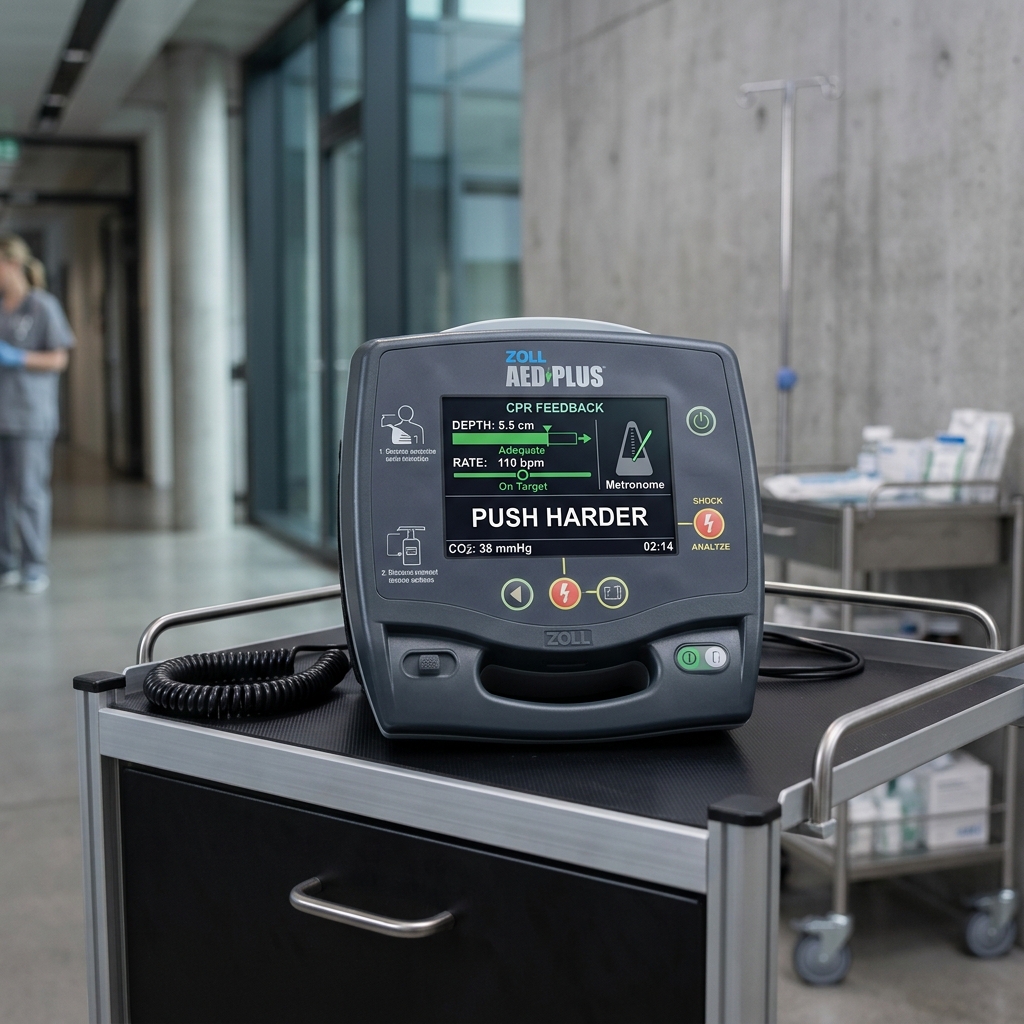
When choosing an AED in Morocco, the device's technology must support rapid action under extreme stress. Feedback from emergency and SAMU physicians: 1) Real-time CPR feedback (as on the Zoll AED Plus or Mindray BeneHeart C series) is critical: a metronome and sensor indicate whether chest compressions reach the required 5–6 cm depth at 100–120 cpm. 2) Thoracic impedance adaptation: the unit automatically tailors its biphasic waveform to the victim's body mass. 3) Rapid capacitor charge time: modern units deliver the first shock in under 8 seconds after rhythm analysis, minimizing CPR interruptions to preserve cerebral perfusion.
- Pad placement: sternal pad below the right clavicle, apical pad on the left flank (mid-axillary line below the armpit). On a hairy chest, a quick shave is essential to prevent arcing from excessive contact impedance.
- Wet or sweating chest: always dry the thorax thoroughly before placing pads. Surface water shunts the electric current across the skin, preventing it from reaching the myocardium.
- Shockable vs non-shockable rhythms: the AED only shocks Ventricular Fibrillation (VF) or pulseless Ventricular Tachycardia (VT). In asystole (flatline), no shock is advised: continuous CPR is the sole life-saving action.
4. Maintenance, second-hand hazards, and consumables warning in Morocco
Objective clinical safety advice: beware of second-hand AEDs imported from Europe and sold cheaply through informal Moroccan channels. High-voltage capacitors (150J to 360J discharge) undergo chemical aging after 8–10 years on standby: they may fail to charge or deliver energy well below the therapeutic threshold during a real cardiac arrest. Furthermore, two consumables require strict vigilance: 1) Sealed pads: the conductive hydrogel dries out over time. Expired pads cause severe skin burns and trigger device impedance errors, halting shock delivery. 2) Lithium battery packs: old batteries lose their peak instantaneous current discharge capacity.
- Free monthly facility checklist: verify the visual self-test indicator (green flashing or solid), check pad expiration dates on the sealed pouch, and ensure the emergency rescue kit (shaving razor, Jesco trauma shears, nitrile gloves) is present.
- Defibrillator tester and metrology: any AED in a clinical environment must undergo an annual discharge test on a biomedical test bench to verify exact Joule energy accuracy.
5. Regulatory framework, Law 84-12, and DMP compliance in Morocco
In Morocco, the legal framework governing defibrillators rests on two pillars: 1) Law 84-12 regarding medical devices: every defibrillator imported or sold in Morocco must hold an official registration certificate from the DMP (Direction du Médicament et de la Pharmacie) of the Ministry of Health, confirming CE/FDA conformity and clinical safety. 2) The Moroccan Labor Code (Article 281 et seq.), which binds employer civil and criminal liability regarding workplace health and safety. In the event of a cardiac arrest in a public building or enterprise, proof of a compliant, inspected AED with valid consumables is a decisive legal safeguard.
FAST QUOTE
Comparison of professional defibrillator prices in Morocco
| Model | Type | Key Features | Indicative Price |
|---|---|---|---|
| IPAD NF1200 | AED (Automatic) | Cost-effective, rugged, ideal for SMEs and offices | From 14,500 MAD excl. VAT |
| IPAD SP1 | SAD / AED | Adult/child switch, ambient volume adjustment | From 18,500 MAD excl. VAT |
| Zoll AED Plus | SAD (Semi-Auto) | Real-time CPR feedback, IP55 ruggedness rating | From 29,000 MAD excl. VAT |
Frequently Asked Questions
Is training on how to use a defibrillator mandatory in Morocco?▼
No, using an AED is legally open to anyone without mandatory training, to avoid delaying assistance. However, for clinics and businesses in Morocco, providing a short first-aid course (CPR/AED) to some staff members is highly recommended to improve response time and reduce hesitation during an emergency.
What is the lifespan of consumables (battery and electrodes)?▼
Lifespan depends on the brand and model of the device. On average, electrodes (or pads) last between 2 and 5 years and must be replaced after each use or upon expiration. For batteries, standby life ranges from 4 to 5 years. It is essential to monitor the device's self-test indicator and order replacements on MediUnit before they expire.
Can the same defibrillator be used for both adults and children?▼
Yes, but how this works depends on the model. Some defibrillators like the IPAD SP1 feature an adult/child switch on the front panel that instantly adapts the shock energy level without changing electrodes. Other models require purchasing and connecting specific pediatric electrodes that reduce the delivered energy to protect the child's heart.
Does the defibrillator require registration with the Moroccan Ministry of Health?▼
Yes, any medical device imported and marketed in Morocco must be registered and receive a marketing authorization issued by the DMP (Direction du Médicament et de la Pharmacie) of the Ministry of Health. MediUnit provides all CE compliance certificates and official registrations for the regulatory traceability of your equipment.
Abdelrhafar Naouri
Clinical Director & Medical Sourcing Expert
With over 15 years of experience managing clinical facilities and medical equipment sourcing in Morocco, Abdelrhafar Naouri guides healthcare professionals in securing regulatory-compliant medical supplies under Ministry of Health (DMP) standards.
Actions
Next step
Move from content to execution: open a structured quote, browse brands, or activate the client portal to centralize orders and documents.
Related articles
All Resuscitation & Emergencies articles