Resuscitation & Emergencies
AED Maintenance in Morocco: The Complete Guide to Servicing Your Defibrillator
By Abdelrhafar Naouri7 min readUpdated · June 2026
An unmaintained defibrillator can fail during a cardiac arrest. Learn the checks to perform, the consumable replacement schedule, and the maintenance contracts available in Morocco.
Back to resourcesWhy is AED maintenance critical?
A cardiac arrest happens without warning. If your defibrillator has a dead battery, expired electrodes, or a faulty circuit at the time of an emergency, the device cannot save a life. According to the European Resuscitation Council (ERC 2021), using an AED within the first 3 to 5 minutes of cardiac arrest can bring the survival rate to 50–70%. That figure collapses if the device is out of service. In Morocco, while there is no legal standard yet imposing a normalized annual maintenance schedule (such as the French NF S99-170 standard), the Direction du Médicament et de la Pharmacie (DMP) recommends that any active medical device undergo regular verification. For clinics and healthcare establishments, the facility manager bears direct liability in case of preventable failure.
- Cardiac arrest survival rate: 50–70% with an AED used within the first 5 minutes (ERC 2021).
- Without an operational defibrillator, every additional minute reduces survival chances by 10%.
Daily and monthly self-tests: what your AED checks automatically
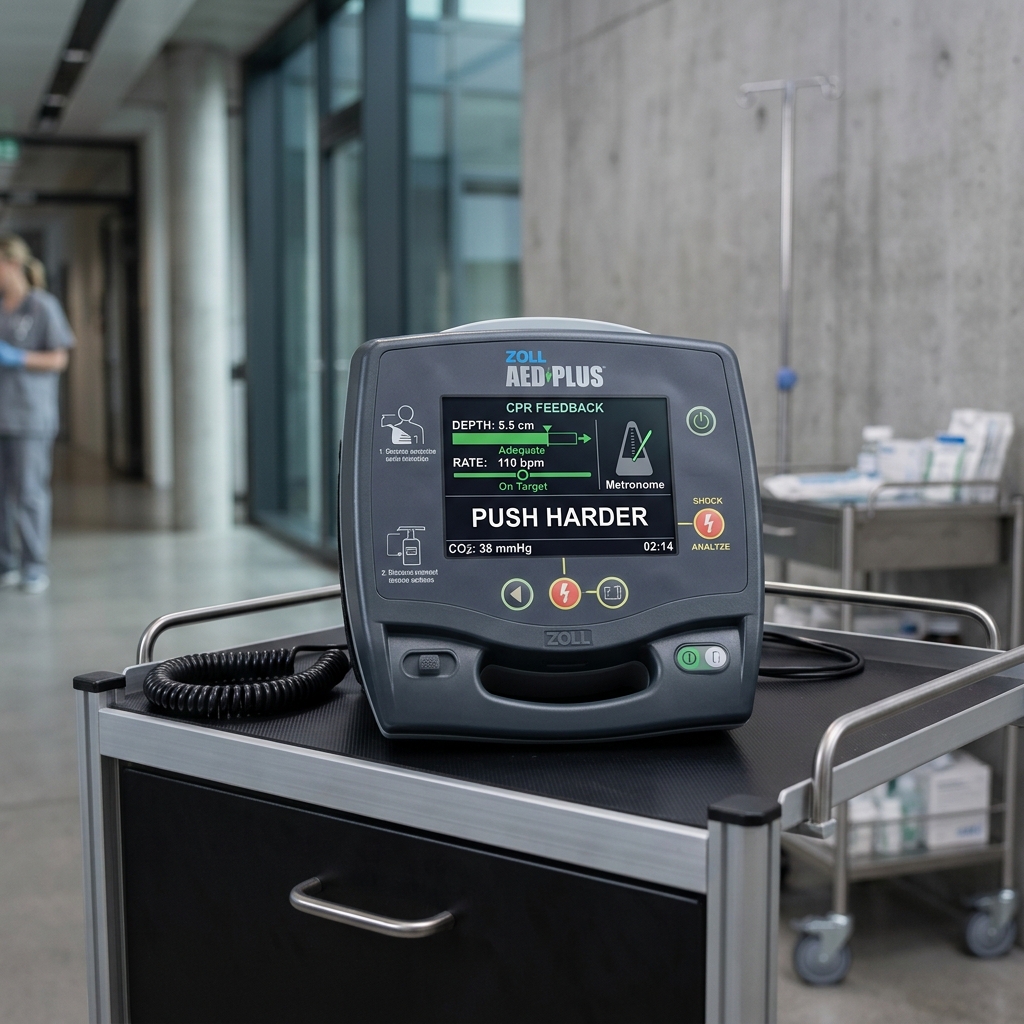
Most modern defibrillators (IPAD NF1200, IPAD SP1, ZOLL AED Plus) perform automatic self-diagnostics at regular intervals: daily for electronic circuits, weekly or monthly for battery charge levels and electrode checks. A green status indicator (or an audible beep) signals the device is operational. A red or orange indicator flags an anomaly. It is essential to visually check this indicator at least once per week and log it in a maintenance register. This register is mandatory in case of an internal audit or regulatory inspection by the DMP.
- Flashing green indicator = operational device. Red indicator = immediate intervention required.
- Keep a weekly control log: date, indicator status, signatory. Essential for DMP traceability.
Consumable replacement schedule
The two critical consumables in a defibrillator are the electrodes (pads) and the battery. Adult electrodes have a shelf life of 2 to 5 years depending on the manufacturer and must be replaced after each use or at their expiry date, whichever comes first. For pediatric electrodes, the shelf life is similar but must be provisioned if your establishment receives children under 8 years old or under 25 kg. The battery has a standby lifespan of 4 to 5 years for most models. Beyond this period, even if the indicator is green, the battery may not provide the energy needed for defibrillation. MediUnit offers an automatic alert service: we notify you by email and WhatsApp 3 months before the expiry dates of your device fleet's consumables.
- Adult electrodes: shelf life 2–5 years. Replace after each use (even brief).
- Battery: standby lifespan 4–5 years. Preventive replacement recommended from year 4.
- MediUnit automatically alerts your teams 3 months before each expiry date.
Preventive maintenance contract: why subscribe?
An annual maintenance contract with MediUnit includes: an on-site technical visit by a certified technician, a full device inspection (circuits, battery, electrodes, speakers, display), a defibrillation protocol update if recommended by the manufacturer, a dated and signed inspection report (for your DMP traceability), and a proactive alert before each consumable expiry date. This contract is particularly recommended for clinics, 4–5 star hotels, companies with more than 50 employees, sports centers, and all classified ERP establishments. In case of urgent intervention, MediUnit guarantees a 48h response time in Casablanca, Rabat, Tangier, and Marrakech.
- Annual on-site technical visit by a certified technician.
- Dated and signed inspection report for DMP traceability and internal audit.
- Guaranteed 48h response time in Casablanca, Rabat, Tangier, and Marrakech.
Weekly check: practical checklist for your teams
Train a designated AED coordinator in your establishment (safety manager, nurse, office manager) and provide them with this weekly checklist. It takes less than 2 minutes and constitutes your first line of defense against a silent failure.
- ☑ Green status indicator visible and flashing.
- ☑ Housing intact, no cracks or impact marks.
- ☑ Electrodes present and expiry date > 6 months away.
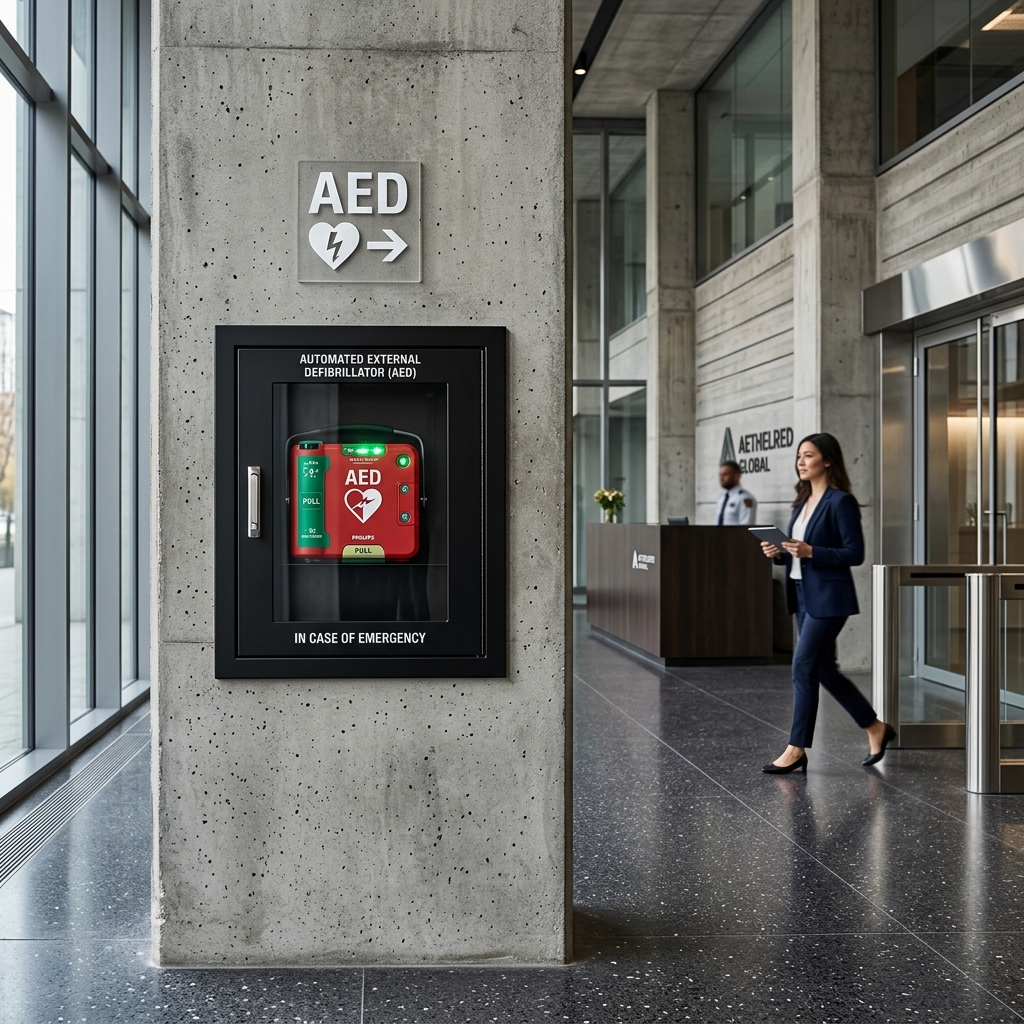
- ☑ Wall cabinet accessible and not blocked by furniture.
- ☑ AED signage visible from 10 meters.
- ☑ Entry logged in the control register (date + initials).
When should you call a certified technician?
Some situations go beyond routine maintenance and require the intervention of a certified technician: persistent red or orange indicator despite checking consumables, error beep at startup, shock not delivered during actual use (without injury), physical damage to the device (fall, water contact), and battery or electrode replacement on professional models (ZOLL AED Plus) which require reconfiguration. Contact MediUnit to trigger a technical intervention. Outside Casablanca, our partner technicians cover Rabat, Fès, Marrakech, Agadir, Tangier, and the industrial zones of Kénitra.
Frequently Asked Questions
Is annual AED maintenance mandatory in Morocco?▼
There is currently no legal standard in Morocco imposing a normalized annual maintenance schedule for AEDs (unlike France with the NF S99-170 standard). However, the DMP recommends regular verification of active medical devices, and the facility manager bears liability in case of preventable failure. MediUnit recommends an annual maintenance contract for all equipped establishments.
How much does a defibrillator maintenance contract cost in Morocco?▼
The cost depends on the number of devices, their model, and your location. For a single device in Casablanca or Rabat, expect between 800 and 1,500 MAD excl. VAT/year for complete preventive maintenance (visit + report + consumable alerts). Multi-site and multi-device packages are available on request.
What should I do after using my defibrillator during a cardiac arrest?▼
After an actual use: 1) Immediately replace the used electrodes (they can never be reused). 2) Recharge or replace the battery if it has delivered more than 5 shocks. 3) Export the event data if the model allows it (useful for emergency services and the medical file). 4) Contact MediUnit for a post-use inspection before putting the device back into service. 5) Report the incident in your safety register.
Sources & References
Abdelrhafar Naouri
Clinical Director & Medical Sourcing Expert
With over 15 years of experience managing clinical facilities and medical equipment sourcing in Morocco, Abdelrhafar Naouri guides healthcare professionals in securing regulatory-compliant medical supplies under Ministry of Health (DMP) standards.
Actions
Next step
Move from content to execution: open a structured quote, browse brands, or activate the client portal to centralize orders and documents.
Related articles
All Resuscitation & Emergencies articles