
How to choose your medical bed: manual vs electric / automatic
Complete comparative guide for purchasing hospital beds in Morocco. Analysis of ergonomic criteria, autonomy, and technical comparison of manual and electric beds.
Back to resources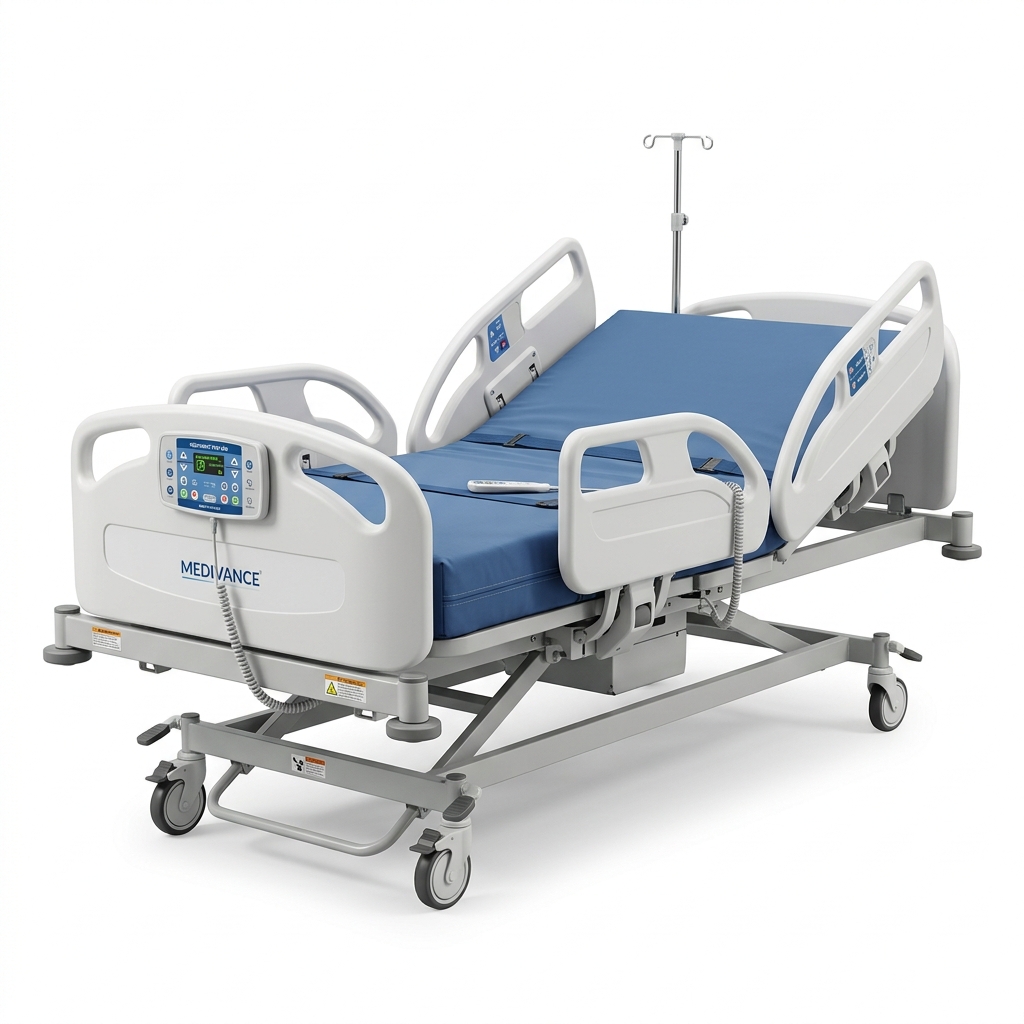
1. Introduction: The Importance of Bed Selection in Morocco's Healthcare Sector
Whether equipping a premium private clinic in Casablanca, an intensive care unit in Rabat, or ensuring clinical-grade home care in Tangier, selecting the right medicalized bed is a critical factor for patient recovery and caregiver efficiency. An unsuitable bed can worsen pressure sore risks, increase clinical staff physical strain during daily protocols, and limit the patient's independence. This comprehensive guide analyzes the fundamental differences between manual and electric hospital beds, helping you source the most suitable furniture for your clinical and budgetary requirements in Morocco.
2. Manual vs Electric/Automatic Beds: The Technical Comparison
The primary difference lies in how the bed's articulations are operated. Manual beds (such as the LIT-MAN-2M) rely on retractable mechanical cranks located at the foot of the bed. While robust and fully independent of electrical power, they require physical effort from the caregiver and prevent the patient from adjusting their position independently. Electric beds (such as the LIT-3F-ALU-01 and LIT-3F-ABS-01) incorporate quiet electric actuators controlled by a wired remote. This allows the patient or caregiver to adjust the height, backrest, and leg rest with zero physical effort, promoting autonomy and reducing occupational injuries.
- Caregiver Strain: Zero on electric beds due to powered actuators; moderate to high on manual beds depending on patient weight.
- Patient Autonomy: Complete with the electric remote; non-existent on a manual bed as the mechanism is out of the patient's reach.
- Power Dependency: Manual beds operate anywhere without power. Electric beds require a mains outlet or an integrated backup battery.
3. The 3 Key Functions for Comfort and Clinical Prevention
A high-performance medical bed typically provides 3 major postural adjustment functions: 1) Backrest adjustment (head elevation) from 0° to 70°, vital for eating, reading, helping patients with cardiac or respiratory insufficiency breathe easier, and preventing acid reflux. 2) Leg rest adjustment (foot elevation) from 0° to 35°, which promotes venous return, reduces lower limb edema, and enhances overall postural comfort. 3) Variable height (available on electric models like the LIT-3F-ABS-01), which allows lowering the bed for safe patient transfers (standing/lying down) and raising it to let caregivers perform clinical tasks at ergonomic heights.
4. Materials, Safety, and Hygiene Protocols in Morocco
A hospital bed's structure must be robust and easy to sanitize to prevent hospital-acquired infections (HAIs). Epoxy-coated steel frames that resist harsh disinfectants are the industry standard. Side rails protect the patient from accidental falls. Aluminum folding side rails (featured on the LIT-3F-ALU-01) collapse vertically, whereas 4-panel independent ABS side rails (featured on the LIT-3F-ABS-01) provide enhanced protection and serve as support handles during transfers. Additionally, molded ABS head and footboards must be detachable to facilitate deep sanitization and allow rapid airway access at the head of the bed during cardio-respiratory emergencies.
5. Sourcing Hospital Beds: Catalog Overview and B2BSourcing Advice
MediUnit stocks a complete range of beds to meet all clinical scenarios in Morocco: The manual bed LIT-MAN-2M comes fully equipped with aluminum side rails, an adjustable IV pole, and a removable overbed table. It represents the best cost-effective choice for long-term home care or clinics on tighter budgets. For modern medical settings, the electric bed LIT-3F-ALU-01 offers the ultimate value by automating all key adjustments. For high-turnover services or private wards, the premium electric bed LIT-3F-ABS-01, featuring 4 independent ABS panels and centralized braking, delivers the highest level of safety and infection control compliance.
6. Pressure Ulcer Prevention, IEC 60601-2-52 Anti-Entrapment Standard, and Emergency Safety
Outfitting a clinical room goes beyond the bed's physical frame: two critical clinical and safety requirements must be strictly enforced. First, pressure sore prevention: for any patient bedridden for more than 15 hours daily or scoring below 14 on the Braden Scale, an articulating bed must be paired with an active alternating-pressure air mattress. Clinically, caregivers must avoid maintaining backrest elevation above 30° for extended periods to eliminate skin shear stresses over the sacrum that accelerate deep tissue necrosis. Second, side rail safety under international standard IEC 60601-2-52: clearances between rail bars and between the mattress edge and rail must never exceed 120 mm to prevent fatal head/neck entrapment and asphyxiation in confused or stroke patients. Finally, for hospital and clinic settings, verify that the bed incorporates a bilateral manual CPR emergency release lever, enabling instant flattening of the backrest during sudden cardiac arrest without waiting 15 to 20 seconds for electric motors.
- Braden Score <14: motorized alternating air mattress mandatory; cap backrest angle at 30° to prevent sacral shear forces.
- IEC 60601-2-52 compliance: gaps between rails and bedframe <120 mm to eliminate fatal head or chest entrapment risks.
- Instant manual CPR release: 1-second mechanical flat positioning essential in resuscitation and acute wards.
FURNITURE CATALOG
Technical comparison matrix and indicative B2B prices in Morocco
| Model | Mechanism | Functions & Positions | Side Rails / Panels | Indicative Price |
|---|---|---|---|---|
| LIT-MAN-2M (Manual) | Mechanical (2 cranks) | Backrest (0-70°), Leg rest (0-35°) | Aluminum folding | Upon Quote (Budget) |
| LIT-3F-ALU-01 (Electric) | Electric (3 motors) | Backrest, Leg rest, Height variable | Aluminum folding | 13,921.88 MAD excl. VAT |
| LIT-3F-ABS-01 (Premium) | Electric (3 motors) | Backrest, Leg rest, Height + Central brakes | 4 Independent ABS panels | 22,171.88 MAD excl. VAT |
Frequently Asked Questions
What are the advantages of an electric bed compared to a manual bed?▼
The electric bed eliminates physical strain for the caregiver and allows the patient to adjust their posture independently using a remote control. It also provides more precise position adjustments and typically includes variable height functionality, which is absent on most manual beds.
What happens in the event of a power outage with an electric bed?▼
The premium LIT-3F-ABS-01 model features an integrated backup battery that guarantees uninterrupted motor operation during a power failure. For models without a battery, the bed remains locked in its current posture until power is restored, unless equipped with a manual emergency lowering mechanism.
Is a medicalized bed suitable for home care in Morocco?▼
Yes, absolutely. For home care, the manual LIT-MAN-2M model is highly popular due to its cost-effectiveness and simplicity. However, for patients with limited physical strength or those requiring frequent transfers, the electric LIT-3F-ALU-01 is strongly recommended to reduce the caregiver's physical burden.
What type of mattress should be chosen to prevent pressure ulcers on a hospital bed?▼
Mattress selection depends directly on the patient's Braden Score. For low-to-moderate risk (temporary reduced mobility), a high-resilience castellated foam mattress (Class 1) is sufficient to redistribute pressure points. For permanently bedridden patients (>15 hours/day, hemiplegic, quadriplegic, or frail geriatric with Braden score <14), an alternating-pressure dynamic air mattress (Class 2 or 3) is clinically mandatory. Its motorized cells cyclically inflate and deflate every 8 to 12 minutes to restore capillary blood flow, preventing ischemic tissue necrosis at the sacrum and heels. Ensure mattress depth does not compromise rail safety height: maintaining at least 22 cm from uncompressed mattress top to rail top per IEC 60601-2-52.
What are the hazards of buying a second-hand or artisanal hospital bed in Morocco?▼
Sourcing second-hand informal or artisan-welded beds involves three severe clinical risks: 1) Non-compliance with IEC 60601-2-52 entrapment clearances: rail gaps exceeding 120 mm or lateral frame gaps have caused fatal head/neck asphyxiations in disoriented or post-stroke patients. 2) Sudden mechanical collapse: worn crank gears or fatigued actuators can strip under patient load, causing traumatic falls and spinal fractures. 3) Electrical and biological hazards: motors lacking IPX4 moisture ingress protection risk electrocution during sanitization, while non-medical epoxy coatings chip under chlorine bleach, creating unsterilizable reservoirs for MRSA and resistant bacteria.
Abdelrhafar Naouri
Clinical Director & Medical Sourcing Expert
With over 15 years of experience managing clinical facilities and medical equipment sourcing in Morocco, Abdelrhafar Naouri guides healthcare professionals in securing regulatory-compliant medical supplies under Ministry of Health (DMP) standards.
Actions
Next step
Move from content to execution: open a structured quote, browse brands, or activate the client portal to centralize orders and documents.